Showing posts with label alzheimersideas. Show all posts

Monday, May 4, 2009

Still looking for a Mother's Day Gift


Do you want to give a gift that a lady with dementia will enjoy and help Alzheimer's research at the sametime. Choose a gift from giftback.com
10% of the cost of the gift goes to your favorite charity

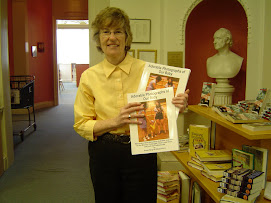
The book, Adorable Photographs of Our Baby-Meaningful Mind Stimulating Activities and More for the Memory Challenged, Their Loved Ones and Involved Professionals a book for those with dementia and an excellent resource for caregivers and healthcare professionals, is another good choice.

The author is donating a potion of the cost of the book to the Alzheimer's Association.

If neither of those appeal to you, you can always get a gift card from Amazon.com

Leave a comment if you have any questions

Also For a great resource for those with dementia, caregivers and healthcare professinals, click here

For information on being the best caregiver you can be, click here

For more interesting dementia articles and activities, click here

Tuesday, April 28, 2009

How will you honor her this Mother's Day?


Angela Geiger
This Mother's Day, you're invited to honor your mother, grandmother, aunt or godmother by taking advantage of an exclusive, online-only opportunity...

Mother's Day Gift Challenge

Kindred Healthcare, Inc., a healthcare services company whose mission is to promote healing, provide hope and preserve dignity and produce value for every person they serve, is one of our generous corporate sponsors. Kindred Healthcare works with us to raise awareness about Alzheimer's and has created a very special matching gift challenge to help us in our fight against Alzheimer's disease.Simply put, they've made an extraordinary pledge to match any gift you send in by Mother's Day, May 10, 2009… dollar for dollar… up to $50,000 in all!Your special Mother's day donation of $35 will become $70. A gift of $60 will become $120… Double the Impact

In fact, any amount you send by May 10 will have double the impact on our ability to bring about increased awareness of Alzheimer's and advocate for more research funding. Your gift will also help provide vitally important community programs and services to make life a little easier for those living with Alzheimer's, and their families. We're making great progress, but with more money we could do so much more… Please join with Kindred and take advantage of this matching gift opportunity and commemorate Mother's Day by sending your most generous tax-deductible contribution today!

For a great resource for those with dementia, caregivers and healthcare professinals,click here Susan Berg, author donates money to the Alzheimer's Association for each book she sells

For information on being the best caregiver you can be, click here

For more interesting dementia articles and activities, click here

Sunday, April 26, 2009

Humanin Peptide May Be New Drug Target For Diabetes, Alzheimer's Disease

ScienceDaily — Recent studies have shown that the mitochondrial peptide Humanin (HN) protects against neuronal cell death such as happens in Alzheimer's disease. Now, in a study presented April 22 at Experimental Biology 2009 in New Orleans, Dr. Nir Barzilai reports that a small infusion of HN is the most potent regulator of insulin metabolism that his research team has ever seen, significantly improving overall insulin sensitivity and sharply decreasing the glucose levels of diabetic rats.

The finding is the first evidence of a role for.....read the whole article

For a great resource for those with dementia, caregivers and healthcare professinals, click here

For information on being the best caregiver you can be, click here

For more interesting dementia articles and activities, click here

Friday, April 24, 2009

Project Lifesaver

WJFW-Channel 12
Green Bay, Wisconsin

Vilas County - If you have a loved one with Alzheimers or a cognitive disability you may worry about them wandering.

Now there's a new program in the Northwoods to help ease your worries.

It's only as big as your watch--but for people with Alzheimers or dementia related disorders it can save rescue time.

Julie Scmitz-Trachte says "We know that six out of ten people with Alzheimers will wander or have the potential to wander at some point."

It's called Project Lifesaver. Julie Schmitz-Trachte works for the Alzheimers Association. She says if a person wanders away it usually doesn't take long to find them.

Julie says "when they do leave the house, the caregiver would notify the Sheriff's Department who would immediately would start a search and the general time is about 30 minutes with the bracelet on."

The Vilas County Sherrif's Department is one of the departments working with the Alzheimers Assocation. Chief Deputy Joe Fath says Project Lifesaver makes Vilas County a safer place.

Project Lifesaver isn't only for people with Alzheimers or dementia related disorders--it's also availble to............read the whole story

For a great resource for those with dementia, caregivers and healthcare professinals, click here

For information on being the best caregiver you can be, click here

For more interesting dementia articles and activities, click here

Monday, April 20, 2009

Do Feeding Tubes Help or Harm in Advanced Dementia?

NEWSWISE

Family members grappling with the decision to allow a feeding tube for a relative with advanced dementia will find little comfort from a new review of evidence.

Poor food intake is common in individuals with dementia for a variety of reasons. In advanced dementia, health care providers might intervene by feeding patients artificially, usually by inserting a feeding tube through the stomach. This decision is emotional, controversial and influenced by complex ethical issues.

But do feeding tubes actually help people with degenerative dementia? In a new Cochrane review from London, doctors searched for evidence that this intervention was beneficial.

“We found that there is no research evidence that tube feeding prolongs survival or improves the quality of life for people with advanced dementia,” said lead author Elizabeth Sampson, M.D. “In fact, some studies suggest that tube feeding may have an effect opposite to the desired and actually increase mortality, morbidity and reduce quality of life.”

The review appears in the current issue of The Cochrane Library, a publication of The Cochrane Collaboration, an international organization that evaluates research in all aspects of health care. Systematic reviews draw evidence-based conclusions about medical practice after considering both the content and quality of existing trials on a topic.

At first glance, it appears counterintuitive that individuals fail to benefit from tube feeding, but.....read the whole article

For a great resource for those with dementia, caregivers and healthcare professinals, click here

For information on being the best caregiver you can be, click here

For more interesting dementia articles and activities, click here
Sunday, April 19, 2009

Dance Into a Healthy Old Age

NEWSMAX.com

By: Sylvia Booth Hubbard

The answer to staying healthy and happy as you age may be as close as the nearest dance floor, according to a chorus of studies.

Dancing offers mental, physical, and social benefits, while perhaps reducing the risk of illness and even counteracting the ravages of aging, a study at Queen’s University Belfast found.

“It alleviates social isolation and quite literally helps take away the aches and pains associated with older age,” said researcher Dr. Jonathan Skinner.

Scientists at the Albert Einstein College of Medicine found that ballroom dancing helps prevent dementia and Alzheimer’s disease. Another study found that older people who danced had better balance and gait than non-dancers.

In the dementia study......read the whole article

For a great resource for those with dementia, caregivers and healthcare professinals, click here

For information on being the best caregiver you can be, click here

For more interesting dementia articles and activities, click here

Saturday, April 18, 2009

Crisis in long-term health: Boomers caring for elderly parents, but who will care for them?

Pioneer Press

Updated: 04/17/2009 11:03:24 PM CDT

WHO WILL CARE FOR THEM?

The demands of caring for their aging parents are putting a strain on the generation born after World War II. But the children of baby boomers will face an even greater burden.
By Jeremy Olson
jolson@pioneerpress.com
Maggie Jessen was once the death of her mother — a teenage wild child who smoked and ignored schoolwork and left home at age 16 after an argument with her father.

Now, she is the lifeline keeping her 91-year-old mother, Maurine Martin, out of a nursing home.

Maurine has lived the past four years in Maggie's home in St. Paul, in a bedroom that Maggie's husband built in place of the back porch. She is forgetful and hallucinates about cats and children. Sometimes, she thinks her room is an apartment and calls her daughter's house "the building."

Caring for Maurine takes energy and patience — whatever Maggie has left after working with special-education students at Central High School. Friends tell Maggie she's "done her time," but they don't undersBut studies show that tand.

"You can't understand unless you've been through it," she said. "I mean, it's my mom!"

A cluttered nursing home may be the stereotype of elder care in the United States, but spouses, friends and adult children provide more than 90 percent of the care to the nation's frail and elderly. This informal network is the backbone of the nation's long-term-care system, and it will be needed more than ever as the baby boomers

But studies show that..........read the whole article and comments

For a great resource for those with dementia, caregivers and healthcare professinals, click here

For information on being the best caregiver you can be, click here

For more interesting dementia articles and activities, click here

Thursday, April 16, 2009

Learn About the Fisher Center For Alzheimer's Research Foundation.

The Fisher Center For Alzheimer's Research Foundation is team of internationally renowned scientists, under the direction of Nobel laureate Dr. Paul Greengard, has been at the forefront of seminal research that has provided the conceptual framework for modern day investigations into Alzheimer’s disease. The Fisher Center for Alzheimer’s Research at The Rockefeller University headquartered in New York City collaborates with the other leading research institutions around the world in the global pursuit for the cause, care and cure of Alzheimer’s disease.

Of every dollar raised, 94 cents goes directly to research programs

The mission is dedicated to attacking the scourge of Alzheimer's with a 3-pronged assault focused on the cause, care, and cure for Alzheimer's disease as well as supporting the public with educational programs.

To read more about the Fisher Center For Alzheimer's Research Foundation, click here

To donate, click here

For information on being the best caregiver you can be, click here

For a great resource for those with dementia, caregivers and healthcare professinals, click here

Wednesday, April 15, 2009

Low Blood Sugar May Increase Risk for Dementia

By KSPR News

Story Created: Apr 14, 2009

Story Updated: Apr 14, 2009

Diabetes may raise the risk for dementia in older adults, new research finds.

Previous studies have suggested that high blood sugar can raise the odds of dementia, and now a new study finds low blood sugar may have the same effect.

Doctors tracking thousands of patients with type 2 diabetes found those hospitalized for episodes of low blood sugar had a greater chance of developing dementia.

Emerging research suggests adults with type 2 diabetes may face an increased risk for dementia as they grow older.

Those with high blood sugar levels are more likely to have mental impairment. Now for the first time, doctors have found a link between low
blood sugar and dementia in diabetics.

Researchers from Kaiser Permanente followed more than 16,000 seniors with type 2 diabetes.

They found that those who had........read the whole article

For information on being the best caregiver you can be, click here

For a great resource for those with dementia, caregivers and healthcare professinals, click here

Thursday, March 26, 2009

Memantine Benefits Overall and Specific Cognitive Abilities

Doctors Guide
Dispatcch

Memantine Benefits Overall and Specific Cognitive Abilities in Patients With Moderate to Severe Alzheimer's Disease: Presented at ADPD
By Chris Berrie

PRAGUE, Czech Republic -- March 15, 2009 -- Memantine demonstrates significant benefits on global cognition as well as on specific single cognitive items in patients with moderate to severe Alzheimer's disease (AD), according to study data presented here at the 9th International Conference on Alzheimer's and Parkinson's Diseases (ADPD).

Coinvestigator Patrizia Mecocci, MD, PhD, Institute of Gerontology and Geriatrics, University of Perugia, Perugia, Italy, presented this post hoc analysis of combined data from 6 multicentre, randomised trials here on March 14.

This analysis was designed to assess the effects.....read the whole atory

For more dementia information, click here

For Alzheimer's and dementia activities, click here

For information on being the best caregiver you can be, click here

For a great resource for those with dementia, caregivers and healthcare professinals, click here

Friday, February 13, 2009

Alzheimer’s and Being Thankful

payingforalzheimerscare
Brian Willie
I was reminded that we all have a lot to be thankful for. Great family and friends are at the top of the list. You don’t really know what you’ve got or how good you have it until you come close to losing something dear to you. This is a picture of my 8 month old labrador Lacy on the day my wife, daughter and I brought her home from the breeder......read the whole article

For dementia information, click here

For dementia activities, click here

Information on making caregiving easier, click here

Saturday, January 3, 2009

Medicare and Alzheimer’s Disease

payingforalzheimerscare

by Brian Willie

Did you know that Medicare does not cover most of what a person with Alzheimer’s needs? Many people confuse Medicare and Medicaid. I like to look at it this way: Medicare only cares if you are “lucky” enough to have the right disease! I know –it sounds absurd. But it’s true. If your family member had a stroke and needed rehabilitation in a skilled nursing facility following a hospital stay-Medicare probably cares about her and will pay-at least for awhile. If on the other hand your loved one has Alzheimer’s and needs that same skilled nursing stay-Medicare no longer cares. In that case other methods of paying must be explored.

For great tips, tricks and techniques on helping to pay for Alzheimer’s care visit: http://www.PayingForAlzheimersCare.com and get my FREE Ebook today

For more dementia information, click here

For Alzheimer's and dementia activity ideas, click here

Thursday, January 1, 2009

Paying for Alzheimer's and dementia care

payingforalzheimerscare.wordpress.com
by Brian Willie
Brian explains how families can pay for the extraordinarily high cost of Alzheimer’s care
For great tips, tricks and techniques on helping pay for Alzheimer’s care visit: PayingForAlzheimersCare and get the FREE Ebook by Brian today.
Do not forget to watch the video by Brian

For more information on dementia, click here

For great activities for those with Alzheimer's disease and related dementias,
click here

Friday, December 19, 2008

Dementia: mind games

The Independent

If physical exercise keeps the body young and healthy, does mental exercise do the same for the brain? Does a sudoku a day keep dementia away?
Dr Fred Kavalier answers your health question:

Physical exercise undoubtedly prolongs life and reduces the risk of many diseases, including heart disease, cancer and osteoporosis. There is even some evidence that regular physical exercise reduces the risk of developing dementia. But it is less clear that mental exercises will do the same for the brain. According to the Alzheimer's Society, certain activities are linked to a reduced risk of dementia. These include....read the whole article

Click here to see an award winning blog which has great activities that keep the mind of a dementia person, active.

Here is another great dementia activity blog

Wednesday, December 17, 2008

CSIRO scientists announce Alzheimer's disease breakthrough

EurekAlert
Rapid screening system may lead to prevention or delay of Alzheimer's disease Alzheimer's disease is the most common type of dementia
Astrid Engelen
The Netherlands – Australian scientists at CSIRO (Commonwealth Scientific and Industrial Research Organisation), have developed a new system to screen for compounds that can inhibit one of the processes that takes place during the progression of Alzheimer's disease, the most common type of dementia. In a paper published in the November issue of the Journal of Alzheimer's Disease, folate is shown to be beneficial in the screening system.

Lead author, CSIRO's Dr Ian Macreadie says folate is already well known to have a protective effect against Alzheimer's disease, which is believed to be caused by the loss of neurons in the brain due to a process whereby toxic multimers of a small protein called Aβ are formed.

"However, a team of scientists working within CSIRO's Preventative Health Flagship has discovered a......read the whole story

For information on dementia, click here

For ideas on dementia activities, click here

Sunday, December 14, 2008

Alzheimer's, related dementias, and the holidays

About Dementia
Holidays: Just the facts
For most families, holidays are filled with opportunities for togetherness, sharing laughter and memories. But holidays can also be filled with stress, disappointment and sadness.

Because of the changes he or she has experienced, the person with Alzheimer's or a related dementia, may feel a special sense of loss and time passing during holiday season. At the same time, caregivers may feel overwhelmed in their effort to maintain holiday traditions on top of caring for the person with this disease. In addition, caregivers may feel hesitant to invite other family and friends over to share the holiday, for fear they will react negatively to the changed behavior of the family member.

If you are feeling guilty, angry, frustrated, or trapped before, during or after holiday celebrations, it may help to know that these feelings.....read the whole article

For more helpful information- go here

You can see other holiday ideas here

Saturday, December 13, 2008

Cholinesterase inhibitors reduce aggression, wandering and paranoia in Alzheimer's disease

EurekAlert
INDIANAPOLIS — Cholinesterase inhibitors, used to treat cognitive symptoms of Alzheimer's disease, are also a safe and effective alternative therapy for the behavioral and psychological symptoms of dementia, according to a study that appears in the December 2008 edition of Clinical Interventions in Aging.

Investigators from the Indiana University School of Medicine, the Regenstrief Institute and Wishard Health Services reviewed nine randomized, double-blind, placebo-controlled clinical trials evaluating the effectiveness of three popular cholinesterase inhibitors in managing behavioral and psychological symptoms displayed by patients with Alzheimer's disease.

The researchers report that the trial results indicate.....read the whole article

click here for more useful information about Alzheimer's disease and other dementias

Friday, December 12, 2008

Slow Alzheimer's and other dementias with exercise

Stop Aging Now
By Maggie Spilner
Fitness, Walking and Yoga Expert
If you know someone who feels helpless about having early Alzheimer’s disease or dementia, here’s something they can do to ward off anxiety and slow the progress of their disease—exercise! New research shows the important relationship between exercise and Alzheimer’s.

A recent study found that people with early Alzheimer's disease who were less physically fit had four times more brain shrinkage than those who were more physically fit. (Burns, J. Neurology, July 15, 2008; vol. 71: pp 210-216.) Researchers think that exercise has a....read the whole article

Ror more information on how to slow Alzheimer's and related dementias, click here

Thursday, December 11, 2008

Man, 91, charged with strangling wife with Alzheimer's disease

Do not let this happen in your family.Get the sopport you need when it comes to dealing with someone who has Alzheimer's disease or another dementia
Freep.com
BY TAMMY STABLES BATTAGLIA • FREE PRESS STAFF WRITER
Benno Zoch, who was undergoing a psychiatric evaluation in Ann Arbor today, has no recollection of the Thanksgiving Day death of his wife, Taimi Zoch, 87, his court-appointed lawyer said.


“He’s upset with the loss,” Michael West said. He interviewed Zoch at Port Huron Hospital before Zoch's bedside arraignment Tuesday afternoon. “He knows that she’s dead because people have told him she’s dead. But he doesn’t know how she died.


“On the surface, he’s a very pleasant 91-year-old man,” West added. “(He says) that he loved her — and that....read the whole story

For information about dementia click here

Monday, December 8, 2008

Caregiver Tips For Getting Through the Day

Ezine
By Rebecca Sharp Colmer

The duties of the caregiver usually change and increase over a period of time. One of the most difficult aspects of the caregiver role is that the job continues seven days a week, 24 hours a day.

One way to help caregivers get through the day is to set up a care plan and develop a routine.

The caregiver's care plan is very similar to the nurse's plan of care and the hospice plan of care. It is a daily record of the care and treatment of the care-receiver.

It provides a record of events that assist everyone on the care team. It also allows another caregiver to take your place fairly easily. With a written plan you don't have to rely on your memory.

A daily record will help both the caregiver and the care-receiver, and everyone on the care team. For any care plan to work, the care-receiver should be included in every possible aspect of the planning process. This may be difficultif the are receiver has Alzheimer's diseasor another dementia.

Then observation and a loosely stuctured routine might work best

To get started the family must determine who is going to be the primary caregiver. This person will have the main responsibility for the actual care.

Establishing a well-thought out care plan will help relieve stress for everyone involved. Many decisions will have to be made.

An evaluation of needs and activities can be done to assess and determine a baseline which will help determine the caregiver's duties.

These may include....read the whole article

click here for more ideas about activities