Showing posts with label Alzheimer's disease. Show all posts

Friday, July 10, 2009

Adult day care: Supporting seniors and their caregivers

ABC News 6


By Eve Glicksman, Staff Writer, myOptumHealth

Ruth knew that something had to change. Her mother, 81, was not getting around as well now, but insisted on living on her own. Ruth looked in on her whenever she could, but worried about her safety and her being alone all day.

Most older adults prefer to stay in their own home for as long as they are able. But what if that person gets confused, has trouble moving about or needs medication reminders?

The surge of older adults living on their own has spurred a demand today for programs to assist them. Many need help with routine tasks, but are not frail enough to need institutional care.

Adult day care is ideal for those who have physical or cognitive challenges, but don't require 24-hour supervision. This might include those in the early stages of Alzheimer's disease, people who need help taking medicine or adults who are isolated. The goal is to get the person out of the house and into a safe, supportive group setting.

Varied activities keep participants active, social and mentally alert. An adult day program may provide:

Nutritious meals and snacks
Transportation to and from the center
Health support services (e.g., blood pressure monitoring)
Social events like holiday parties or sing-a-longs
Personal care, such as help with toileting
Recreation and games, including exercise
Functional assistance and therapy
Counseling and support groups for caregivers
These programs may be the best solution for caregivers who don't want to place a loved one in an assisted living facility. Beyond the benefits for the senior, caregivers can get a much-needed break or can care for a relative while holding a job.

Types of adult day care
People in day care must be able to get around on their own or with the help of a cane, walker or wheelchair. In most cases, they must be continent as well. Beyond that, there are three program types to consider.

Social day care is for those who only need minimal help.They are not up to planning activities themselves, but can enjoy organized day trips, group discussions or crafts. Some may come solely for the friends.
Adult day health care provides some of the same activities, plus skilled nursing and rehabilitation for medical problems. A health assessment is required before being admitted, and fees are higher than for a social program.
Specialized day care offers services for groups with specific problems, such as Alzheimer's disease or developmental disabilities.
Adult day programs operates.........read all about adult day care

Here is a great dementia resource for caregivers and healthcare professinals,

Here is information on being the best caregiver you can be

Here are more interesting dementia articles and activities,

Monday, June 29, 2009

Alzheimer's volunteer buddy respite program

Edited by: Lauri Rottmayer
Email: rottmayer@kjrh.com

More than 77,000 Oklahomans suffer from Alzheimer’s Disease. The daily care of a person with Alzheimer's Disease can be challenging and requires many personal sacrifices to ensure a loved one remains safe and comfortable. Caregivers need time off from their caregiving responsibilities to relieve stress and prevent burnout.

To help reduce the stress, the Alzheimer’s Association Oklahoma and Arkansas Chapter is seeking individuals who may be interested in volunteering for a Volunteer Respite Buddy Program. Currently, there are more requests for respite care than volunteers already enrolled in the program.

The Alzheimer’s Association recruits and trains respite volunteers for individuals who are in the early stages of Alzheimer’s disease. After completing training, each volunteer is carefully matched with a caregiving family. The volunteer spends 2-4 hours with the person with Alzheimer’s or related dementia each week, while the caregiver takes a break. Caregivers tell us it means the world to them to know that someone cares enough to help. Respite volunteers tell us this is one of the most meaningful things they’ve ever done. If you are interested in learning more about becoming a respite volunteer, please call 800-272-3900 and ask for Cathy Sullins or Ruth Drew.

Respite care provides a break for caregivers, time when they can run errands, rest, relieve stress, and attend to their own needs. Caregivers who do not receive support and respite often become sick themselves. Some even die due to the strain. Regular respite is essential and lifesaving.

“Respite care provides a temporary break from daily caregiving responsibilities. Using respite services can support and strengthen the ability to continue taking care of a loved one with Alzheimer's in the home,” said Tonda Ames, vice president of marketing and programs for the Alzheimer’s Association Oklahoma and Arkansas Chapter.

The Alzheimer’s Association is the largest voluntary health organization in.......read all of the Alzheimer's volunteer buddy respite program

Here is a great dementia resource for caregivers and healthcare professinals,

Here is information on being the best caregiver you can be

Here are more interesting dementia articles and activities

Saturday, June 27, 2009

Caregivers need help in war on dementia

Tallahassee.com

Bonnie Holub

Obviously, my cousins and I never saw our grandfather fight the battles of WWII. But we watched him battle hard on another front with as much determination, care, strength and bravery as he must have exhibited to his men. Our grandmother, Alice Smith, became unable to travel to the 807th reunions because of her fight with Parkinson's, one of many diseases associated with dementia. Her fight became our grandfather's fight, too.

Our grandmother passed away at age 89, just a week shy of their 70th wedding anniversary. The last few years were ones of constant care for my grandmother, by my grandfather. Family members, especially my uncle and mother, helped enormously, but the emotional and physical toll on Papo was immeasurable. And yet, he was always positive. Always in an upbeat, if not tired, mood. And he was able to keep his wife at home. A major victory in a long losing war.

One of the reinforcements that helped sustain my grandfather during the most difficult times of my grandmother's illness was his "mornings off," for golfing or fishing with my uncle. Agnes Rodgers, a friend who we now know is as an angel on Earth, cared for my grandmother five mornings a week, so father and son could get away from the responsibilities of caregiving for a few needed hours of recreation. Without this intervention, the toll on my grandfather may have been debilitating, perhaps robbing him of another healthy decade of life. Papo passed away at age 101, after a brief illness, and as mentally sharp as ever.


To stay mentally and physically healthy, caregivers need care, too. Almost everyone knows someone whose family members are doing battle with Alzheimer's or some other form of dementia. And I don't know a caregiver who wouldn't benefit from a little R&R.

Thanks to the Alzheimer's Project of the Big Bend Area, reinforcements are on the way for Wakulla caregivers. Those who are caring for someone suffering from any form of dementia may bring their loved ones to the Respite Care Room at Lake Ellen Baptist Church Fellowship Hall in Crawfordville, two Mondays a month. Trained volunteers and a registered nurse, Project Director Lori Chandler, will provide care free of charge to participants, allowing caregivers a few hours' break.

Recie Culpepper, volunteer coordinator with the Alzheimer's Project of the Big Bend, said participants can enjoy group activities, friendly conversation, walks, games, music, snacks, and meals. Pat Ashley, whose mother suffered from dementia and who established the Wakulla Alzheimer's Support Groups, is instrumental in organizing the Respite Care Room. She asked that anyone who would like to volunteer a few hours each month contact her for training information. She also said contributions to the resources of the Respite Care Room are needed and appreciated. Donations can be in the form of lunches, snacks, paper goods, games, craft materials or cash. "We already have donations from Auto Trim Design and Walgreen's," Ashley said. "And the Catholic Ladies Circle is providing our first lunch for participants on June 15."

Joyce Frazier, volunteer coordinator for the Respite Care Room, said, "Most of our volunteers have had a family member with dementia. We know what it's like, and we are here with our arms open wide for those who need us."

"Our goal is to provide this service every Monday of the month if we can get enough volunteer help," added Ashley.

Most of us, at some point in our lives, do battle for something or someone we love. The fight against dementia can be overwhelming, but if we stand with each other in the midst of the struggle, the keys to many hearts will be among our lifetime awards.

To stay mentally and physically healthy, caregivers need care, too. Almost everyone knows someone whose family members are doing battle with Alzheimer's or some other form of dementia. And I don't know a caregiver who wouldn't benefit from a little R&R.

Thanks to the Alzheimer's Project of the Big Bend Area, reinforcements are on the way for Wakulla caregivers. Those who are caring for someone suffering from any form of dementia may bring their loved ones to the Respite Care Room at Lake Ellen Baptist Church Fellowship Hall in Crawfordville, two Mondays a month. Trained volunteers and a registered nurse, Project Director Lori Chandler, will provide care free of charge to participants, allowing caregivers a few hours' break.

Recie Culpepper, volunteer coordinator with the Alzheimer's Project of the Big Bend, said participants can enjoy group activities, friendly conversation, walks, games, music, snacks, and meals. Pat Ashley, whose mother suffered from dementia and who established the Wakulla Alzheimer's Support Groups, is instrumental in organizing the Respite Care Room. She asked that anyone who would like to volunteer a few hours each month contact her for training information. She also said contributions to the resources of the Respite Care Room are needed and appreciated. Donations can be in the form of lunches, snacks, paper goods, games, craft materials or cash. "We already have donations from Auto Trim Design and Walgreen's," Ashley said. "And the Catholic Ladies Circle is providing our first lunch for participants on June 15."

Joyce Frazier, volunteer coordinator for the Respite Care Room, said, "Most of our volunteers have had a family member with dementia. We know what it's like, and we are here with our arms open wide for those who need us."

"Our goal is to provide this service every Monday......read more on Caregivers need help in war on dementia

Here is a great dementia resource for caregivers and healthcare professinals,

Here is information on being the best caregiver you can be

Here are more interesting dementia articles and activities,

Tuesday, June 2, 2009

Exelon Patch: Less is Better

Alzheimer's and Dementia Weekly

Sometimes less is more: Lower doses of an Alzheimer’s drug delivered via skin patches improve cognition with fewer serious side effects than higher doses, researchers have found in an updated review.

The drug is rivastigmine, known in the U.S. by its brand name, Exelon.

“Is there any advantage of giving patients higher doses of rivastigmine? There doesn’t seem to be any,” said lead review author Jacqueline Birks, senior medical statistician for the University of Oxford, in England.

Previous studies had shown that high daily doses of rivastigmine (also known by its brand name, Exelon) of between 6 and 12 milligrams improved cognitive functions, such as memory, language and ability to perform simple daily living tasks, in patients with mild to moderate Alzheimer’s disease.

However, adverse events often.......read the whole story


For a great resource for those with dementia, caregivers and healthcare professinals, click here


For information on being the best caregiver you can be, click here


For more interesting dementia articles and activities, click here

Sunday, May 24, 2009

Memorial Day-a perfect time to honor folks with dementia

healthnews-stat.com

Dementia,including Alzheimer disease, affects about one in 13 seniors,many of them veterans. As you remember our war heroes on Memorial Day,think about what you can do for them.They did so much for us.
Veterans who suffer from various forms of dementia, including Alzheimer disease, often have very specific care needs. It is important that these veterans are cared for by people who understand their condition and have the appropriate instruction and skills.

Therefore encourage family members of veterans to gain the training they need to care for their loved one with dementia.

For those in nursing homes and other institutions, make sure veterans with dementia are visited often.

All people, including those with memory loss, need human contact. They need to be hugged. They need to hear your voice. They may not know you but as long as you know who they are, that's all that matters.

Talk to them about their service to our country. Often they will share stories with you because their time in the service made a huge impression on them

Tell them how proud you are of them. Thank them for their service. This is sure to make them feel good. Most likely, it will make them smile

Smile with a veteran. Laughter is wonderful medicine...

Sing patriotic songs with a veteran with dementia. Often they will be able o sing many familiar songs even though, they may not be able.......read the whole article

For a great resource for those with dementia, caregivers and healthcare professinals, click here

For information on being the best caregiver you can be, click here

For more interesting dementia articles and activities, click here

Thursday, May 14, 2009

Family frustrations: caregiver challenges within the family

Sharon K. Brothers, MSW
My sister and I have never been really close. She's three years younger than me, but very different in her preferences and lifestyle. She makes a living training horses, for example; I'm essentially afraid of all big animals.

It shouldn't have surprised me, then, when my mom needed lots of assistance after an accident that my sister and I approached it from very different perspectives. My mom lives close to my home (my sister lives two states away), so naturally many of the day-to-day tasks fell to me and my family. Somehow that didn't stop my sister from weighing in on a regular basis. The conversations often went like this:

Mom: "Sharon came by and took me to the doctor this morning."

Sis: "I hope she didn't just drop you off in the waiting room!"

Mom: "Well, I'm perfectly able to talk to the doctor without her in the room."

Sis: "Still, she should have stayed with you through the whole visit. I don't know what she was thinking!"

Of course, what I was thinking was that I have three kids at home, a business to run, a house, a husband and a dog. If my mom can manage any aspect of her care needs without my hands'-on help, I'm going to step aside and let her!

Most families, I've discovered, have similar sibling dynamics. One sibling (or sib-in-law) becomes the primary caregiver, responsible for the regular tasks like transportation, shopping, laundry and more. Other sibs, often living across the country (or maybe just a few miles away) are content to let the one sib do most of the work.

You'd think that the other family members would recognize the hard work of the caregiving sibling and be profoundly thankful - and you'd be wrong. Most often, siblings who don't have the direct experience don't really know what is involved, or how hard the caregiving sibling works.

It's easy to second-guess someone whose shoes you haven't walked in. It's not easy being on the receiving end, though.

What can you do?

1. Take it easy. Recognize that only you know how much effort is involved for you to keep all your balls in the air. There's no way anyone else can know exactly what your life is like, so don't expect them to know. Try to breath, smile and say, "I'd like to see her give this a try!"

2. Pass the torch. This is especially important for those distance siblings who say, "What are you thinking - moving mom into an assisted living center?! She can't be that much care!" Invite your mom to their house, and let them have a chance to see first hand exactly what mom does need.

3. Gather support. If you've got other siblings who can rally to your support, pull them in. In my case, my brother offered me constant support while my sister second-guessed every move I made - or at least it felt like it to me. So, every time I finished talking to my sister, I'd pick up the phone and call my brother. He would patiently reassure me that what I was doing was exactly right, and we could laugh together at my sister's many comments.

4. Hold a family meeting. Every family should sit down together and talk about big decisions, preferably before those big decisions need to be made. Involve the parents, if possible, and talk about choices for care (at home with help? At an assisted living center? Sell the house? Rent to a grandchild?). Make sure you talk about money, too, as decisions come with price tags that often are surprising. For example, keeping mom at home, no matter what, is fine if mom can afford to pay for around-the-clock-care (expect to pay several thousands of dollars for 24-hour in-home care), but if money is restricted other options need to be carefully considered. If you can do this together you may be able to avoid some of the worst family conflicts.

5. Get company. You can take comfort from knowing that you're not alone - in fact you're more like most families than unlike them, if you have some sibling discord. You might want to join a support group of other family caregivers (check with your local hospital) to share your frustrations and get support. You'll not only get an outlet for your own feelings, you'll gain new friends and helpful tips for survival from others in similar situations.

My sister and I are closer these days, but we still see mom's care from very different perspectives. Most days, I can smile and nod when I talk to her. Some days it's not so easy. But like all family dynamics, it's a work in progress.

DID YOU KNOW...

Many long term care insurances will cover the cost of caregiver training. Many will also help pay for in-home caregiving provided by Certified Caregivers. Our Caregiver Certification Course is approved by most insurance companies - check it out! We can offer you and your caregivers the training you need - 100% online. For training details and sample course modules, For information on being the best caregiver you can be, click here

For a great resource for those with dementia, caregivers and healthcare professinals, click here

For more interesting dementia articles and activities, click here
Thursday, April 9, 2009

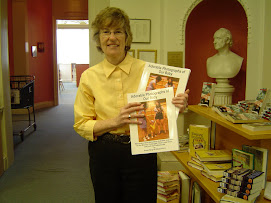
Best ever Easter gifts for those with dementia

Heathnews-stat.com

Choosing the right present for someone with Alzheimer’s disease or a related dementia is certain to give him/her joyful times independently or with a loved one. Here are some tips on how to pick a perfect gift

Over 5.1 million Americans are living with dementia. Is one of them someone you know or a client of yours? Get him/her or anyone with Alzheimer's disease or another dementia, an Easter gift that will keep on giving long after the holiday is gone.

Of course, person appropriate offerings are the best. This means matching a gift to a person’s interests and abilities, However, there are some presents that will make them smile no matter what.

One such gift is a book by Susan Berg called Adorable Photographs of Our Baby -- Meaningful, Mind-Stimulating Activities and More for the Memory Challenged, Their Loved Ones and Involved Professionals, This book features baby photographs that seniors with dementia love. This book shares a plethora of ideas and resources for you.
read the whole thing

For more dementia information, click here

For Alzheimer's and dementia activities, click here

For information on being the best caregiver you can be, click here

For a great resource for those with dementia, caregivers and healthcare professinals, click here

Saturday, March 14, 2009

Seemingly “Innocent” Transfers and Medicaid

payingforalzheimerscare
Brian Willie

Did you know that even seemingly innocent things like adding a son or daughter as a joint owner on an account can be viewed by Medicaid as a transfer of assets? We talked last time how transfers of assets for less than fair market value can create long periods of ineligibility. Well when most people think of transfers, they only think of the obvious-things like giving a loved one a gift of cash or giving them a car or maybe even transferring stock into their name.

But, even things like........read the whole post

For more dementia information, click here

For Alzheimer's and dementia activities, click here

For information on being the best caregiver you can be, click here

For a great resource for those with dementia, caregivers and healthcare professinals, click here

Thursday, March 12, 2009

4 ways to pay for long term care

US News and World Report

Out of your pocket. Medicaid. Other options are long-term care insurance and a reverse mortgage
By Michelle Andrews
Posted March 11, 2009
Who looks forward to living in a nursing home? Few people build the possibility into their financial planning, an understandable lapse but unwise in the long run. Even if they did, the cold fact is that the options available to pay for long-term care, whether it's a nursing home, an assisted living facility, or home care, are limited and too often unaffordable.

Still, it is a harsh reality that about 70 percent of 65-year-olds will need long-term care at some point, according to a study conducted by researchers at Penn State, Georgetown, and the Lewin Group. Of that group, about 30 percent will need it for more than five years. That's extreme—the average long-term stay is about 2½ years. But it's expensive even for short-timers. The average daily rate in 2008 for a semiprivate room was $191 last year, according to MetLife Mature Market Institute's annual survey of nursing homes. Do the math. The sum comes to about $70,000 a year.

Other long-term care options are less onerous but will still wreck many fixed incomes. Assisted living facilities, where people who don't need skilled nursing care can get help with essential but routine chores, are much less expensive, averaging $36,372 annually. For those who can stay put, the services of a home health aide typically cost $20 an hour. Adult day care, another option that can allow someone to continue to live at home with family, costs $64 per day on average, according to MetLife.

Medicare isn't an option for truly long-term care. Coverage of skilled nursing care is limited to 100-day benefit periods and requires at least three days of hospitalization before being admitted to a home. It's fine for someone who's just...
read the whole article

For dementia information, click here

For Alzheimer's and dementia activities, click here

For information on being the best caregiver you can be, click here

For a great resource for those with dementia, caregivers and healthcare professinals, click here

Friday, February 27, 2009

Gender-wise absorbent briefs differ in more ways than 1

If your loved one with dementia is incontinent, you may be interested in this
Kimberly-Clark to introduce new product for $1.2 billion market
By Bill Glauber of the Journal Sentinel

Neenah - On a conference room table inside the sprawling campus of Kimberly-Clark Corp., Greg Fries lays out the past, present and future of adult absorbent underwear.

There's a 1980s version of the Depend brand of incontinence products, an all-white, padded item that looks to the untrained eye like a giant diaper. There's a 1990s version, what amounts to unisex underwear, no-nonsense and no-frills.

And, coming to store shelves by early spring, there is what the company calls "its first line of gender-specific adult absorbent underwear."

That would be Depend protective underwear for men and women. There's a pink waistband for women and a blue one for men. Moreover, the leg opening for men is narrower than it is for women.

"One of the key insights we got was.......read the whole story

For more dementia information, click here
For Alzheimer's and dementia activities, click here
For information on being the best caregiver you can be, click here
For a great resource for those with dementia, caregivers and healthcare professinals, click here

Thursday, February 26, 2009

New York Times Examines Role of Children as Caregivers

Kaiser Daily Health Policy Report

Coverage & Access | New York Times Examines Role of Children as Caregivers
[Feb 24, 2009]
The New York Times on Monday examined the increased number of U.S. children "providing care for sick parents or grandparents," and how schools, social service agencies and health care providers often are "unaware of those responsibilities because family members may be too embarrassed, or stoic." According to a 2005 survey, about 3% of households with children ages eight to 18 include children who serve as caregivers.

"Experts say they expect the numbers to.......read the whole report

For more dementia information, click here

For Alzheimer's and dementia activities, click here

For information on being the best caregiver you can be, click here

For a great resource for those with dementia, caregivers and healthcare professinals, click here

Friday, February 20, 2009

Exercise Boosts Mental Performance in Adults with Memory Problems

Natural News
by: David Gutierrez, staff writer
(NaturalNews) Adults who are having trouble remembering things may be able to boost their mental performance with only moderate physical activity, according to a study conducted by researchers from the University of Melbourne, Australia, and published in the Journal of the American Medical Association.

"Regular exercise is one of the best ways to reduce your risk of dementia and can help slow progression of the condition," said Susanne Sorensen of the Alzheimer's Society. "This study demonstrates that exercise improves cognition in people with mild cognitive impairment, and that there is a lasting effect even after the exercise intervention stops."

Researchers conducted the study on 138 adults over the age of 50 who were suffering from mild memory problems but did not have dementia. One portion of the group was assigned to take part in a 50-minute exercise session three times per week, while the rest was not assigned to any exercise.

The exercise sessions consisted of moderate physical activity like walking.

After 24 weeks....read the whle article

For more dementia information, click here

For Alzheimer's and dementia activities, click here

For information on being the best caregiver you can be, click here

For a great resource for those with dementia, caregivers and healthcare professinals, click here

Thursday, February 19, 2009

How do I get my parents to agree to move into assisted living

Sharon K. Brothers, MSW
A friend cornered me at a social event last Saturday night.

"How do I get my parents to agree to move into assisted living?" he asked.

My first thought was, "Do you seriously expect me to answer that question on my way to get another glass of wine, at a party?!" but then, because I am so passionate about helping our parents the best way we can, I stopped to talk more about this.

It's a question about 1 out of every 5 of my friends seem to be having these days.

What do we do with Mom?

How do we help Dad?

How do we make sure they're OK, and maybe happy, too?

These are the questions we are all facing in our lives.

There are no "one-size-fits-all" answers out there. But there are some themes to guide us.

Quality of life. For me, this is the BIG ONE. I don't really care where my parents choose to live. I don't care whether they get help or not. I DO care if they are happy. If they are lonely, bored, depressed, or seem to have lost interest in life, they need a change. It won't be enough for you to promise to visit more often - they need a bigger change than that.

Safety. This is the other BIG ONE. When my parents lived way out in the country - on the farm where they had lived forever, with their dogs, cows, goats, gardens, (wells and septic tanks, too), they were "happy." But driving to the stores for simple groceries meant curving, country roads and at least 20-30 minutes. Driving to the doctors' office, an increasingly more frequent outing, meant journeys of 45 minutes to an hour and a half, minimum, each way. The wood stove, the well, the garden, the hike from their house to the bottom of the hill to the barn - these things had lost their romance and now just looked like a great place to get injured. With driving being less of a good solution for either of them, how could they safely manage?

For both my parents and my in-laws, the solution was a senior living community. For my parents, it was a matter of safety. They chose a community, still out in the country, of cottages. It has a central "village" of services they can easily walk to, and a van if they need it for longer outings.

For my in-laws who already lived in town it was a matter of happiness. Socially outgoing people, they had lost nearly all of their life-long friends and companions. Staring at each other and watching golf on TV was getting old; the quality of life was quickly slipping away.

I won't say it was easy in either case. It didn't happen quickly. But we all agree today: it was a good thing. It was the right thing to do.

For dementia information, click here

For Alzheimer's and dementia activities, click here

For more information on being the best caregiver you can be, click here

For a great resource for those with dementia, caregivers and healthcare professinals, click here

Monday, February 16, 2009

Alzheimer's disease could be tackled by treating patients' livers

Alzheimer's disease could be tackled by treating the liver of sufferers, so they can dispose of a toxic protein linked to the illness.
Telegraph.co.UK
By Lucy Cockcroft


Scientists believe that helping the liver to clear amyloid-beta protein from the blood could provide a new way of combating the devastating effects of Alzheimer's, the most common form of dementia.

Alzheimer's, which causes progressive loss of memory and mental faculties, affects almost 417,000 people in Britain, including fantasy author Terry Pratchett who is campaigning for more research into the disease.

A key characteristic of the disease is the accumulation of neuron-damaging amyloid-beta (A-beta) in the brain.

New research shows that levels of the protein in the brain are affected by their levels in the peripheral blood stream.

Scientists in the US and Hong Kong manipulated the livers of laboratory rats to increase blood levels of amyloid-beta. One of the liver's primary jobs is to remove toxic substances from the blood stream.

The researchers found that raising A-beta blood levels slowed down the speed at which molecules of the protein were swept from the rats' brains.

The findings, reported in the Journal of Alzheimer's Disease, support the theory that freely circulating amyloid-beta concentrations outside the brain can regulate clearance rates inside the central nervous system.

Dr David Cook, from the University of Washington School of Medicine said: "We knew from previous work that the liver plays an important role in removing A-beta from the blood. So, we thought if we temporarily prevented liver-mediated clearance it might be possible to set or 'clamp' peripheral A-beta levels long enough to find out whether A-beta in the blood stream affects A-beta clearance from the brain.

"We were a bit surprised to see how effective this strategy was. Peripheral A-beta clearance immediately halted almost completely. For several years it has been suggested that the circulatory system can act like an A-beta sink. The data clearly show that the liver is the primary drain."

Co-author Dr Sum Lee, from the University of Hong Kong, said: "The liver influences virtually everything that happens in the body, so it is not far-fetched to imagine that in the future it may be possible to find ways to help the brains of Alzheimer's disease patients with their livers."

Rebecca Wood, chief executive of the Alzheimer's Research Trust, said: "This new study shows us just how complex Alzheimer's disease is, suggesting.........read the whole article

For more dementia information, click here

For Alzheimer's and dementia activities, click here

For information on being the best caregiver you can be, click here

For a great resource for those with dementia, caregivers and healthcare professinals, click here

Sunday, February 15, 2009

Alzheimer’s- Me on Medicaid?

payingforalzheimerscare
BRIAN WILLIE
I often have families come to me and proclaim that they would never need to go on Medicaid. “Isn’t Medicaid for poor families or families with limited resources?” Consider this: A spouse has $200,000 in savings, a home worth $300,000, a car and some personal property. The husband has had Alzheimer’s Disease for 6 years now, and unfortunately, it has steadily progressed to the point where his wife must place him in a skilled nursing facility. That facility charges $5,000 per month. The wife believes that she has too many assets to qualify for Medicaid, and so continues to pay privately, month after month, year after year.

You can guess what happens can’t you? Only 3 years into his stay, their savings is now gone. Four years later, the wife who has had a stroke and has burned through what Medicare will pay, needs to be in a 24 hour skilled nursing facility. How will she pay? Unless she has very high income (which most people at her age don’t), she will be required to use Medicaid paid nursing care. Let’s assume further that the couple has a 45 year old daughter with special needs who cannot care for herself. Had they considered Medicaid as.....click here to read the whole post

For more dementia information, click here

For Alzheimer's and dementia activities, click here

For information on being the best caregiver you can be, click here

For a great resource for those with dementia, caregivers and healthcare professinals, click here

Saturday, February 14, 2009

Alzheimer’s Disease and Hospice Care

payingforalzheimerscare
Brian Willie
There comes a time when there is little more you can do for your loved one with Alzheimer’s. The sad reality is that as some point, they will reach the final stages of the disease. Many families want their loved one to simply die in peace. Larry Beresford, author of The Hospice Handbook, wrote that:

“Hospice is care for the dying. Its primary purpose is to work with the terminally-ill and their families, to help them make the mst of the the time that’s left, and to make their dying more comfortable, less frightening, and in every way more bearable. ”

Hospice care takes on many different forms, but primarily it is a service that provides pain management, comfort care, and even.......
click here to read the whole post

For dementia information, click here

For dementia activities, click here

Information on making caregiving easier, click here

Friday, February 13, 2009

Alzheimer’s and Being Thankful

payingforalzheimerscare
Brian Willie
I was reminded that we all have a lot to be thankful for. Great family and friends are at the top of the list. You don’t really know what you’ve got or how good you have it until you come close to losing something dear to you. This is a picture of my 8 month old labrador Lacy on the day my wife, daughter and I brought her home from the breeder......read the whole article

For dementia information, click here

For dementia activities, click here

Information on making caregiving easier, click here

Thursday, February 12, 2009

Alzheimer’s and Adult Day Care

payingforalzheimerscare
Brian Willie
A major component of your loved one’s ability to remain at home as long as possible is interaction with others. Mind stimulating activities and frequent contact with other people facing similar circumstances is key. Adult day care is a great way to make sure your loved one receives this level of interaction, and can give you as a caregiver a much needed break.

It can also be a very cost-effective option when you compare it with the cost of nursing home care, assisted living facilities etc. Adult day care facilities can be for profit or run by non-profits and are set up to improve your loved one’s quality of life. There are more than 3,500 adult day care facilities in the United States. Many have registered nurses on-site. On average it costs anywhere from $40-60 per day and some facilities allow payment by the hour or half day.

This is a great option for families who want thier loved one with Alzheimer’s.....
read the whole post

For more dementia information, click here

For Alzheimer's and dementia activities, click here

For caregiver education, click here

Monday, February 9, 2009

Top Valentine Gifts For Those With Dementia

Healthnews-stat.com

Valentine’s Day is the perfect chance to give gifts that are not only enjoyable but also beneficial to a person with Alzheimer’s disease or a related dementia. These valentine presents keep on giving long after Valentine's Day is gone

Over 5.1 million Americans are living with dementia. Is one of them someone you know or work with? Get him/her or anyone with Alzheimer's disease a Valentine's Day gift that will keep on giving long after the holiday is gone.

First on the list of gifts is a book by Susan Berg called Adorable Photographs of Our Baby -- Meaningful, Mind-Stimulating Activities and More for the Memory Challenged, Their Loved Ones and Involved Professionals, This book features baby photographs that seniors with dementia love. This book shares a plethora of ideas and resources for you.

Another gift dementia persons will fancy is a......read the whole story

For a great gift for a dementia caregiver, click here

For more dementia information, click here

For activities for those with Alzheimer's disease or a related dementia, click here

Sunday, February 8, 2009

Alzheimer’s and Geriatric Care Managers

payingforalzheimerscare
Brian Willie

A Geriatric Care Manager can be a very useful professional that your family can hire to help with long-term care arrangements. So what is a Geriatric Care Manager (GCM)?

These are licensed or certified professionals, often with a master’s degree in gerontology, nursing, counseling or social work. They can help your family develop a care plan for your loved one with Alzheimer’s and then monitor compliance with that plan.

In your journey through this disease, it will quickly become apparent to you that.... read the whole post

click here to find out how you can be the best caregiver, you can be

For more dementia information, click here

For Alzheimer's and dementia activities, click here