Monday, January 19, 2009

Vitamin B-12: Can it improve memory in Alzheimer's?

Mayo Clinic
Ask the Alzheimer's Expert
Mayo Clinic neuropsychologist Glenn Smith, Ph.D., and colleagues answer select questions from readers.

Vitamin B-12: Can it improve memory in Alzheimerfrom readers.

Answer
Vitamin B-12 helps maintain healthy nerve cells and red blood cells. A vitamin B-12 deficiency — most common in older adults and vegetarians — can cause various signs and symptoms, including memory loss. In such cases, vitamin B-12 supplements can help improve memory.

In the absence of a vitamin B-12 deficiency, there's........read the whole answer

For more dementia information, click here

For Alzheimer's and dementia activities, click here

Sunday, January 18, 2009

Living with dementia means having a game plan to manage the disease

The Daily Gleaner

By CHERYL CLOCK
The Canadian Press
CATHARINES, Ont. - Taped to her living room wall are words that give her strength. Words that give her hope.
A woman from the Alzheimer Society of Niagara Region gave her these words.

And Margaret Ball, a 58-year-old grandmother, reads them every day.

"Worry looks around, Sorry looks back, Faith looks up."

"I believe God only gives you what you can handle," she said from her home in Beamsville, Ont. "God gave it to me. He must know I can handle it."

For the most part, Ball is positive. Strong. She's in the earliest stages of dementia and has resolved to live her life to the best of her ability.

She laughs (even at herself and some challenges she encounters with her short-term memory). She contributes. Appreciates. And still feels a sense of purpose.

She wants people to know that life doesn't end with a diagnosis of dementia. That it goes on. And there can still be joy.

At first, it wasn't obvious. Sometimes she repeated herself. Other times she just seemed a little absent-minded. But isn't everyone?

Then something happened that no one could reason away.

Kevin Sharpen, her 35-year-old son who lives in Hamilton, tells the story. Although it happened just a few years ago, his mother remembers nothing.

Ball was driving a bus, on her way back to the daycare where she worked in Burlington, Ont. It was the morning. She had just dropped off the last of the children at school. Sharpen was at home when she called, crying and panicked.

"Kevin," she sobbed, "I don't know where I am."

"What do you mean?" said Sharpen.

His mother was in the bus. Lost, somewhere along the route she had travelled for years. Sharpen called her boss. Somehow they found her.

Doctors checked her out but didn't have any answers. She was fine for a while. Then, while at the daycare, Ball passed out. Twice.

Again she was checked over. Again, no obvious problem.

Then, in the period of a month, she was in two accidents. In one, she was driving in downtown Hamilton, got disoriented, drove into oncoming traffic and hit a sign post.

Still, doctors had no answers.

The final straw came the day she passed out while doing laundry in her apartment building.

This time, doctors found something. A condition in which her heart stops beating momentarily, for a fraction of a second. And dementia. Likely.......read the whole article

for more dementia information, click here

for Alzheimer's and dementia activities, click here

Saturday, January 17, 2009

Caregiver's provide activities to those with dementia

Alzheimers Activities Expert

National Activity Professionals Week will be celebrated January 18-23, this year. However caregivers of those with Alzheimer's disease and related dementias provide activities every day of the week, 365 days a year

Read about National Activity Professionals Week

Are activities important for those with dementia?

Thursday, January 15, 2009

For Those Whose Lives Are Touched by Memory Loss

simplifyingmotherhood
Trish Berg
Thursday, January 15, 2009
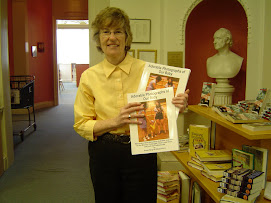
I received a neat little workbook in the mail, and wanted to share the information with you all.

If you have a family member with any memory loss, this is for you.

My dad, Peter, was one of the most intelligent people I ever knew. He was an engineer, an inventor. He had worked on the NASA missions in the 60's back when they were flying the Apollo aircraft out in space. He helped design huge plants out west that turned shale into oil. He traveled around the country to work on various engineering project over my lifetime, and I never thought his life would have come down to what it did.

My dad suffered a stroke just before Mike and I were married in 1991. My parents had been divorced since I was 8 year sold, so I only visited my dad during my growing up years (a subject for a whole different column.)

After his stroke, he lost his engineering job in AL where he was living at the time. He had lost all his engineering abilities. He looked normal on the outside, but his brain was not remembering things.

So he moved to Rhode Island and got a new job there. He got that engineering job based on his resume (which was quite impressive) and his salesmanship (again, quite impressive). Once he began working, it became clear to his new boss that he was not able to perform the work. So he was fired.

Then he tried to get a cashier's job at a department store. He was hired and then quickly fired. This intelligent man, this inventor of things, could not remember how to run a simple cash register.

He fell into a deep depression and did not leave his apartment for over a month.

That's when his landlady called me here in Ohio to let me know what was going on.

We had no idea what my dad had been going through at that point.

As soon as we found out, with the financial help of my mom and step-father, and my in-laws, we drove to RI, picked up my dad, loaded a U-Haul, and moved him in with Mike and me.

That was in 1992. We cared for my dad until his death in 1997. He was only 64 years old when he died. So young. So sad.

During those 5 years of caring for my dad, I learned a lot about dealing with a loved one with memory loss. Peter had dementia, and though his long term memory was good, his short term, memory was terrible.

He could talk to you about.......read the post

********From Susan Berg**********************

Some slight memory loss is normal as we age. However this memory loss should not impact our daily lives.

Mainly what we see in normal aging is that it takes people longer to retrieve information stored in their brain.

In order to maintain our brain and keep it working properly, we should do some basic things

Eat right
Stay mentally and physically active
and NOT partake in any bad habits such as smoking or heavy alcohol consumption.

There has been a lot of research on supplements, new drugs and other devices to prevent, stop and repair memory loss.

However what works right NOW is taking care of yourself.

Make sure to visit her blogs

My blog

http://dementia.today.com/

shares information on what you can do to prevent dementia. Sometimes I site new research studies on various aspects of memory decline, improvement, and even memory activities for those with dementia. Right now I am talking about New Year's resolutions that are sure to keep your brain in tip top shape

On my blog
http://alzact.today.com/

I discuss activities to keep those with dementia mentally and physically active. Caregivers, Activities Directors, other health care professionals, and anyone interested in dementia care can use these activities.

On my blog
http://dementiatips.blogspot.com/

I discuss ways to to maximize positive relationships with those who have Alzheimer's disease and related dementias, I teamed up with Brian Willie of the Alzheimer's Legal Resource Center to share helpful tips on paying for dementia care as well.

read the whole post

finally if you would like to make money blogging, not a get rich quisk scheme or anything like that go to dementia.today.com and click on the red box on the right which says "Get Paid to Blog"

Thanks for your attention

Tuesday, January 13, 2009

Alzheimer’s Disease and Veteran’s Benefits

payingforalzheimerscare

Brian Willie

Most people facing Alzheimer’s have never heard about a Veteran’s Benefit called a Special Monthly or Improved Pension. You may have heard the name “Aid and Attendance” tossed around, and it has sort of become this “mysterious” thing that people have heard exist but no one has any idea how to obtain the benefit.

Aid and Attendance is really a misnomer. The real program is a Special Monthly Pension (also called Improved Pension). Part of that program includes a higher level benefit for Veteran’s needing “Regular Aid and Attendance.” Now, it’s important not to confuse this VA Pension with a VA Disability Pension where the Veteran has been rated disabled due to an injury that occured during a wartime period.

Instead, this is a program that provides for long-term care costs for a Veteran who was not injured during war but is now disabled. This is a really great program for Alzheimer’s. Many families living with Alzheimer’s want to keep their loved one at home for as long as possible. Or, they want to move their mom or dad into a good assisted living facility. Home health care and assisted living can cost tremendous amounts of money. But, if you qualify for this VA benefit, it can provide up to
.......read the whole story

For more dementia information, click here

For Alzheimer's and dementia activities, click here

Monday, January 12, 2009

Food Assistance Becomes a SNAP!

Alzheimer's and Dementia Weekly
You as a caregiver may be interested in this program
Washington, DC - As the worsening economy puts increasing pressure on older Americans with limited income and resources, the need for assistance to buy food is escalating.

To assist people who need help paying for food, the National Council on Aging has enhanced BenefitsCheckUp with a new Web-based service that provides easy access to information about the Supplemental Nutrition Assistance Program (SNAP, the new name for the federal Food Stamp Program), in all 50 states plus the District of Columbia.

"Unfortunately, with states facing deficits and cutting human services programs...read the whole article

For more dementia information, click here

For Alzheimer's and dementia activities, click here

Saturday, January 10, 2009

Alzheimer’s, Medicaid and Resources

payingforalzheimerscare
Brian Willie

When a family member has Alzheimer’s, it’s often neccesary to seek the assistance of Medicaid. Medicaid will want to know all resources (assets) available to the person applying. However, this does not mean that they will count all resources. Generally, there are countable and non-countable resources. When I say non-countable, this means that although they must be disclosed, Medicaid will not take them into consideration when determining whether your loved one qualifies. The following is a list of assets that in most states are considered non-countable:

A home, if the applicant has an intent to return home (generally up to $500,000 in equity)
One automobile
Personal effects
Life insurance with a total face value of $1,500 or less
Property used in a trade or business
It’s important to keep in mind ......READ THE WHOLE POST

For dementia information, click here

For Alzheimer's activity ideas, click here