Saturday, June 20, 2009

Witnessing Alzheimer's: A Caregiver's View

Seattlepi

from: Keri Pollock, Alzheimer's Association (800) 848-7097
Western and Central Washington State Chapter of the Alzheimer's Association

Playbook for Alzheimer's Caregivers: A Practical Tips Guide
Free "How-to" Guide Helps Caregivers Address the Challenges of Caregiving

Currently there are over 110,000 Washingtonians with Alzheimer's and related dementias, ten percent are under the age of 65. That number is expected to triple by 2050. With major cuts in state funding for healthcare and Adult Day Health Services, how do families cope with the challenges of caregiving?

The 2009 Alzheimer's Disease Facts and Figures, released in April by the Alzheimer's Association, states some startling statistics:

• Every 70 seconds, someone develops Alzheimer's disease
• Currently, 5.3 million Americas have Alzheimer's or a related dementia
• That number is expected to triple by 2050 if a cure or treatment isn't found
• Alzheimer's is the 5th leading cause of death of those 65 and older in the U.S.
• In the next two years, the first baby boomers will reach their 65th birthday
• Of the 70 million baby boomers in the U.S., 10 million will develop Alzheimer's disease
• There are 10 million Americans (family, friends and neighbors) providing unpaid care for a person with Alzheimer's or a related dementia

The Western and Central Washington State Chapter of the Alzheimer's Association -- -- headquartered in Seattle and serving 23 counties, knows the number of people with Alzheimer's and related dementias is growing, the challenge it poses on family and friends, as well as the looming public health crisis that this could eventually create. And with the recent cuts in the Washington state budget for adult day health services, families will be grappling on a deeper level with caregiving issues.

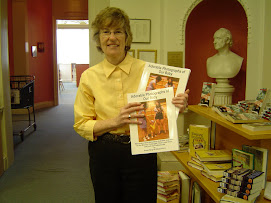
Caregiving for a person with Alzheimer's can be particularly stressful and often compromise the health of caregivers. To help address this issue and provide effective solutions, the Association is making available, free of charge, the concise, purposeful Coach Broyles' Playbook for Alzheimer's Caregivers: A Practical Tips Guide which includes a portable "Pocket Reference of Tips and Strategies".

Coach Broyles is the former Athletic Director for the University of Arkansas Razorbacks, and this "playbook" evolved from his experiences of caring for his wife, Barbara, who had Alzheimer's and passed away in 2004. This insightful, comprehensive guide covers the gamut of topics from communicating with your loved one's doctor to communication tips with your loved one as his or her disease progresses, as well as dressing, wandering, home safety, eating and general survival.

The Western and Central Washington State Chapter offers other resources, available for download at http://www.alz.org/alzwa/in_my_community_13905.asp in addition to their 24-hour-a-day/7-day-a-week toll-free Helpline at 800.848.7097.

Helpline specialists are available to answer questions, provide resources, as well as lend an ear when times gets stressful. Helpline can also link families with the Chapter's Connections Care Consultation Program, providing individualized guidance to families and individuals in addressing immediate needs and planning for the future, with ongoing support throughout the course of the disease. The Chapter offers a variety of Support Groups, trainings and workshops to help in the journey as well.

To receive a copy of the Coach Broyles' Playbook, call the Chapter's Helpline at 800.848.7097 and tell the specialist you would like to have a copy of the PLAYBOOK mailed to you.

Aging and Disability Services of Seattle/King County has generously provided the Alzheimer's Association with a grant to underwrite the cost of mailing the Playbook to residents of King County.

The Western and Central Washington State Chapter of the Alzheimer's Association is headquartered in Seattle and serves 23 counties. Our vision is "A world without Alzheimer's disease." Our mission is to eliminate Alzheimer's disease through the advancement of research; to provide and enhance care and support for all affected; and to reduce the risk of dementia through the promotion of brain health. For more information about Alzheimer's disease, visit www.alzwa.org or call 800-848-7097.

Here is a great dementia resource for caregivers and healthcare professinals,

Here is information on being the best caregiver you can be

Here are more interesting dementia articles and activities,

Thursday, June 18, 2009

Guilt and the family caregiver

Sharon Brothers MSW

When my kids were little, they'd get sick and I'd start stressing. Should I take them to the doctor? Should I let the bug run its course?

Either option seemed to generate a bucket full of guilt. If I called in to the advice nurse the advice was - without fail - bring them in. I'd get to the doctor, and hear what sounded to my ears something like, "Don't worry so much. All kids get bugs from time to time. Don't be such an anxious mom." The doctor would give me the "lots-of-rest-and-plenty-of-fluids" advice, and I'd be home thinking about the time I'd wasted and the expense of taking a kid to the doctor - again - who didn't really need to go.

So the next time a kid got sick I'd say, "We're going to just let this bug run its course. We'll get plenty of rest and lots of fluids. I'm sure in a day or two she'll be fine."

A day or two later, the bug is no better so I finally take the child to the doctor. This time I hear, "Oh my god. Why on earth did you wait so long to bring the child in? She could have died!"

No matter which choice I made, I felt profound anxiety and guilt.

Caring for our aged parents seems to be much of the same: equal parts anxiety and guilt, no matter what we do.

As I read about Brooke Shields' response to reporters finding out about her mom's move into an assisted living community I thought about guilt.

It's easy to let guilt guide our decision-making. It's easy - but not wise. Just like my parenting guilt could have led me to take the kids to the doctor with each sniffle and sneeze, I learned to accept that either decision would most likely result in guilt. And then I made the decision that seemed, based on the facts as I knew then, to be the most appropriate.

With our aging parents we need to make decisions based on facts, too. We need to set feelings of guilt aside and ask ourselves - and our loved ones - what best meets their needs.

When my mom needed 4 people to help her to the bathroom, I had no option. I felt guilty about helping her into a nursing home, but I would have felt guiltier - and been a less responsible daughter - if I would have brought her to my home and then left her with no one to help while I attended to my own work and family needs.

While we're not parenting our parents, we are making choices and decisions, often without their input, on matters that affect nearly every aspect of their lives.

Try these questions to help you check whether you're making decisions based on fact - or on emotions like guilt:

Who can help? If your parent moves into a care community, someone will always be available to help. Often, more than one person will be available. Usually someone will be awake and ready to help even during the night. In a good care community, those helpers are trained and supervised by experienced caregivers. If you choose to leave your parent at home - yours or theirs - can they get the same level of attention and care?

What's my role? Often I hear from family caregivers that are exhausted from nighttime demands, or from caring for their own family, doing their own work, and then trying to do the tasks their loved one needs. Sit down and chat? Go through an old family photo album together? Who has time for that?! If your caregiving tasks demand all the energy you have available, who can provide the companionship and company to your loved one?

Is there joy? I'm a profound believer in finding joy in caregiving. Yes, a lot of the care we provide to loved ones - whether 2 or 102 - not a lot of fun, but is necessary. At the same time, we find ways when we're bathing the baby to laugh, make bubbles and sing together. What about when we're caring for an elderly loved one? Is there joy being shared? Laughter? Find a way to discover the joy in the relationship, or get help with the tasks so you can find new ways to a joyful relationship.

Caregiving, like parenting, will naturally have moments of guilt, anxiety and despair. But if we're caring because we're family, caregiving can also be filled with deep satisfaction and joy.

Are you a new dementia caregiver?

View our a training module, Becoming a Caregiver for free

Here is a great dementia resource for caregivers and healthcare professinals,

Here are more interesting dementia activities and articles,

Wednesday, June 17, 2009

Help a man with dementia and the Alzheimer's Association this Father's Day


Dear Friend and Loyal Follower,

Here is a dementia book that is a great gift fora man with dementia on Father's Day

Finding the right gift for the man with dementia this Father's Day is easy. There are many wonderful items you can buy or make that will make the time you spend together meaningful.

A pefect dementia book for you to get is a book by Susan Berg called: "Adorable Photographs of Our Baby -- Meaningful, Mind-Stimulating Activities and More for the Memory Challenged, Their Loved Ones and Involved Professionals". This book features baby photographs that men with dementia will love. This book shares a plethora of ideas and resources for you, the gift-giver. Men with dementia do love babies.

Thr author is donation a portion of the proceeds to the Alzheimer's Association
Another gift a dementia dad will fancy is a classic musical video or DVD. He will enjoy watching something from the good old days and singing the songs played throughout the picture. Here are a few suggestions: Top Hat, Swing Time, Follow the Fleet, or Shall We Dance.

Next is a sing a long CD or audio cassette of his favorite songs. One with Mitch Miller is a wonderful choice. You may want to get a sing a long video where loved ones can see and hear performers singing songs they love. A good seies is the Sing Along with Frank Woehrle series.

Here is another idea. Give him hand lotion, a manly scent, of course. Just be aware of any allergies or pain issues he might have. Give him a relaxing hand massage talking about how good the hand massage feels and maybe about the good old days, as well. Yes, men love hand massages

If you cannot afford or do not have time to get these gifts, give the gift of yourself. No matter how hard it is for you to visit, he will appreciate your company even though he may not be able to express it. Take him for a walk. Sing some favorite songs together. Give him a hand massage. Just share some quality time with him. You will both feel better.

Do remember to be upbeat animated and excited about visiting. No arguing, please.

These gifts are simple, inexpensive or free, and can be enjoyed by all.

Caregivers and healthcare professinals, dementia resource awaits your viewing


Information on being the best you can be caregiver


Here is an interesting dementia activity

Monday, June 15, 2009

Lewy Body Dementia Webinar

Alzheimer's and Dementia Weekly

This live discussion on Monday, 15 June 2009, from 12 noon to 1 p.m. EST will be carried out in Webinar format and will feature short slide presentations by Ian McKeith, Brit Mollenhauer, James Galvin, James Leverenz, and Walter Schulz-Schaeffer, with audio provided via a telephone line. Lewy Body Webimar.

Dementia with Lewy bodies (DLB)—a disorder at the interface of AD and PD—competes with vascular dementia for second spot (after AD itself) on the list of most common causes of dementia among the elderly. If you just said “Huh!” to yourself, you are not alone. Most people wouldn’t know how frequent DLB is, judging by the vastly smaller amount of attention it receives across the board, from neurologists, psychiatrists, scientists, and funders. But this may be changing. Twenty years after DLB came to be recognized as a clinical and pathological category in its own right, a growing number of researchers from both the dementia and the movement disorder fields believe that AD and PD—formerly viewed as separate domains—are connected across a spectrum, and that DLB links the two. Investigators who formerly focused on one of the two established diseases at either end of the spectrum are now developing an active interest in this mixed disease. In DLB, patients suffer from various combinations of Alzheimer and Parkinson signs, which are compounded by frustrating fluctuations in symptoms, visual hallucinations, visuospatial impairments, and, in many cases, rapid decline. “DLB may provide a link between AD and PD that will help us understand both disorders better,” said Ian McKeith of Newcastle University, UK.

Since 1995, a series of targeted workshops have focused on DLB, and on its neighbor on the PD end of the spectrum (Parkinson disease dementia, aka PDD). The workshops have sharpened the clinico-pathological picture of these diseases to crisper definitions that are applicable in the clinic. Clinicians know now that DLB and PDD patients respond especially favorably to cholinesterase inhibitors as was predicted from their postmortem neurochemical pathology. This past March, the latest in this series of small meetings, held in the German city of Kassel, broke new ground by proposing working groups that are charged with hammering out a collaborative research agenda for both biomarker development and presymptomatic diagnosis. Another priority the scientists set is molecular pathogenesis research that aims to unravel how the three main proteins known to underlie this disease spectrum—amyloid-β, tau, and α-synuclein—conspire in various ways to drive an individual person’s disease. What’s more, a new player on the DLB/PDD/PD end of the spectrum recently burst on the scene in the form of glucocerebrosidase, an enzyme of lipid metabolism whose gene appears to underlie a significant number of cases, and whose modus operandi in disease urgently needs to be figured out.

The Alzforum this past week began an ongoing series of daily stories that summarize recent advances on this topic. They form the background material for this Webinar discussion. So that you can come armed with questions about the latest and greatest, consider reading the introduction about spectrum neurodegeneration, tau in Parkinson’s, dementia with Lewy bodies, oligomers in DLB, AD, brain imaging markers, fluid α-synuclein markers, fluid progranulin markers, Parkinson’s gene reshuffling (to be published Monday), GBA as DLB and PD gene (Tuesday).

Buoyed by such and other advances, the DLB/PDD scientists hope to disabuse the field at large, as well as physicians who see these patients, of the entrenched but quite possibly outdated notion that DLB is rare (they say it’s not), vague (ditto), of indeterminate relationship to AD and PD (ditto), and complex (yes, but tractable). Join us for slide presentations and subsequent discussion.

Here is a great resource dementia for caregivers and healthcare professinals,

Here is information on being the best caregiver you can be

Here are more interesting dementia articles and activities,

Sunday, June 14, 2009

Alzheimer's Disease - Garden Grove CA (Clinical Trial 5582)

Clinical Connection

We are currently conducting a year long research study for participants diagnosed with Alzheimer's disease. Visits are typically once a month with compensation for qualified participants. Visits typically include meeting with neurologist, vitals, ecg, and possible laboratory panel.
Qualified participants must: • Be at least 50 years of age or older
• Have a caregiver (someone who sees the patient on a daily basis)
• Be currently taking Donepezil (Aricept) 10mg for at least 4 months
Participants will receive: Compensation for travel and participation, transportation to and from office (if needed), and medical attention and care.
Study is available at: CNS Network, Inc.
12772 Valley View St. #3
Garden Grove, CA 92845

If you meet the above criteria and live within 50 miles of this clinic please enter your information below and click “I Am Interested In This Study” to be contacted by the study coordinator.

Here is a great resource dementia for caregivers and healthcare professinals,

Here is information on being the best caregiver you can be

Here are more interesting dementia articles and activities

Saturday, June 13, 2009

Chess and Alzheimer's

ChessNinja.com
By Mig

In an interview with the local León paper, event organizer (since 1997) Marcelino Sión relates a conversation with Leontxo Garcia about chess as a means of combating Alzheimer's Disease. (Garcia has long promoted the benefits of chess in this area.) There are various studies about the effects of various cognitive pastimes -- crossword puzzles, sudoku, etc -- delaying the onset of Alzheimer's and other types of aphasia and deterioration of mental faculties. Sión relates Leontxo's question and I'll pass it on to you: Have you ever known of a strong chessplayer with Alzheimer's?

I haven't, and I would extend that not only to strong players but also to weak-but-dedicated amateurs who continued playing regularly deeply into their senior years. Surely that's a better test of the theory anyway. On the other hand, Miguel Najdorf, who was very strong well into his 70s, and quite clear-headed if rather cantankerous, was told by his doctors to stop playing speed chess because it was rough on his weak heart. Another plus for classical chess!

David Shenk's book "The Immortal Game" discussed this topic and he was interviewed about it on ABC News a few years ago. Video here, ChessBase article on it here. You can get more googling.

32 Comments
dmcw | June 5, 2009 4:58 AM | Reply
You cannot rule out the possibility that those who start developing dementia as they get older will stop playing chess. So the aged population of amateur chess players without dementia may be self-selected to be resistant. I think this is known as the "healthy worker effect".

Perhaps the Gandmaster anecdote is better. This obviously suffers from a smaller sample size and none of them will have "normal" brains, but they are selected at an early age when pre-dementia changes should not have happened.

I will not say too much, as I have not read any of the literature about this and so may be barking up the wrong tree.

Dan

chess and Alzheimer's

Here is a great resource dementia for caregivers and healthcare professinals,

Here is information on being the best caregiver you can be

Here are more interesting dementia articles and activities,

Thursday, June 11, 2009

New FDA approved medical food product to combat Alzheimer's Disease

Examiner.com

David Lindberg

When I first began reading about this new approach to fighting Alzheimer’s Disease, my first thought was that this was probably a vitamin supplement product, like the thousands of supplemental products that may or may not do what they promise. I started doing some research and discovered that there is actually an FDA category for medical food, which is what this new product is, named Axona. Axona is a product of Accera, Inc.

NOTE - (This is not an endorsement of a product, but a presentation of a new therapy in the fight against Alzheimer's Disease)

The first interview was with P. Murali Doraiswamy MD is professor of psychiatry at Duke University and co-author of The Alzheimer’s Action Plan.

Q1.) Can you tell me a little about Axona, what you’re role is in this discovery and what you’re general thoughts are about Alzheimer’s research going on right now?

The answer and much more

Here is a great resource dementia for caregivers and healthcare professinals,

Here is information on being the best caregiver you can be

Here are more interesting dementia articles and activities,